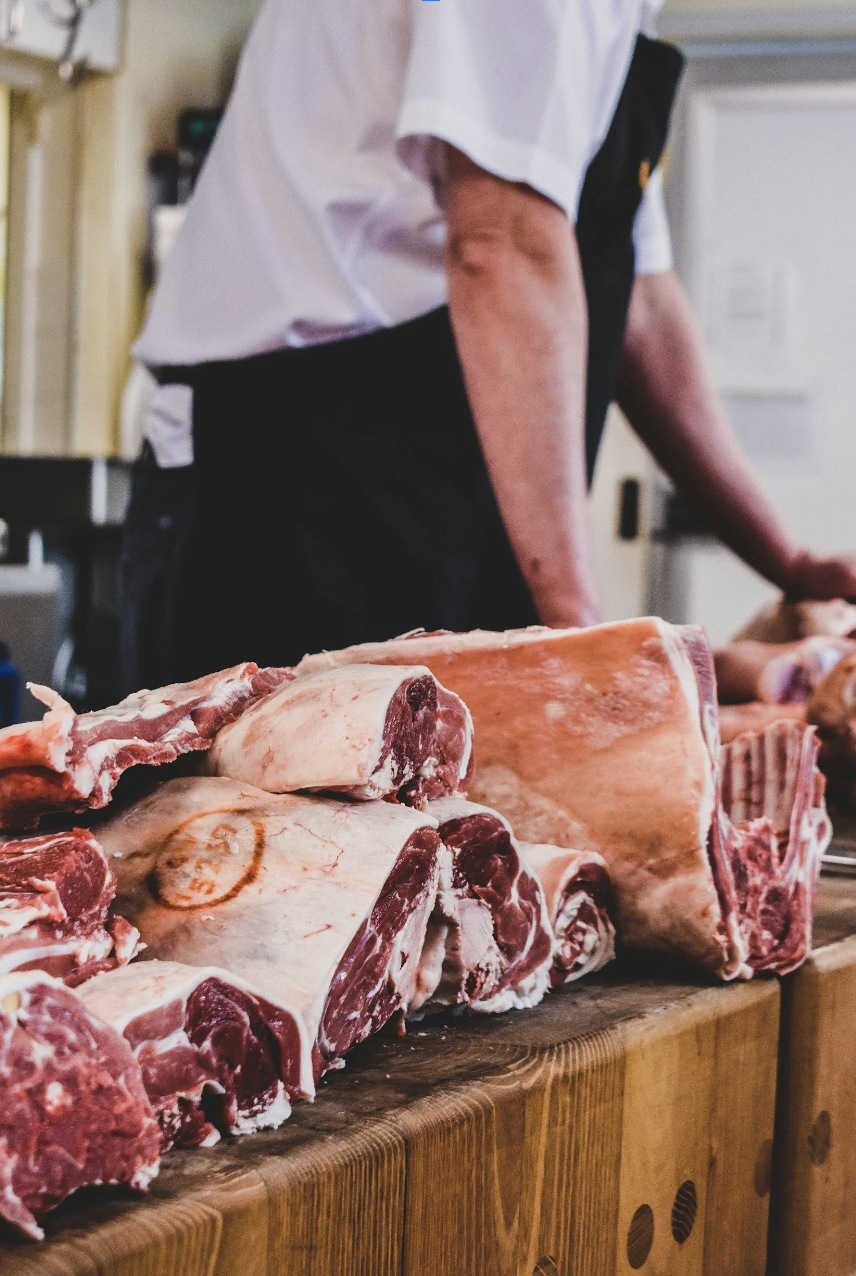
The Invitation
Reserved for chefs and private clients who can taste pasture done properly.
Ridgemeade lamb is offered through a Private Client Registry for select kitchens and serious private buyers.
We prioritize relationships over one off transactions so allocation stays consistent and standards stay protected.
Membership is limited by what the land produces each season.Registry clients receive seasonal availability updates and first access to allocation.
For chefs interested in custom instructions, we can accomodate finish to spec and collaborate on whole carcass, primals, target weights, fat cover, cut standards, and dry aging protocols.In return, we ask for a real partnership - clear communication, honest feedback, and menu attribution when possible and appropriate. Flavor is built on decisions made 6-12 months earlier, and the loop matters.
We deliver directly so chain of custody stays intact. You know the farm. You know the handling. You know the season.
This is not a commodity ingredient. It is a terroir based protein raised to an uncompromising standard.If you want samples or prefer to walk the pasture before a menu placement, visits are encouraged. Schedule HERE.
Interested in buying from us?
Click HEREAlready a partner?
Login in for current availability and pricing HERE

Understanding the True Ridgemeade Difference
Our first question isn’t, “How many pounds can we produce per acre?”
Our question is, “How good can lamb become?”"
Our lamb begins with a simple idea: the landscape matters.
On the Lake Erie ridge, our sheep graze a complex, evolving pasture rather than a chemically controlled forage monoculture. Mixed native and naturalized grasses grow alongside flowering forbs, wild carrot, trefoil, woody browse, tree leaves and seasonal sprouts. The flock moves through this landscape and selects its own diet from what the season provides.
That botanical diversity creates a remarkably diverse secondary-metabolite landscape. Depending on the plants being grazed, the forage can contain terpenes and terpenoids—including compounds such as limonene and α- and β-pinene—along with flavonoids, phenolics and tannins.
We aren’t trying to grow the highest-protein plant.
All of our grazing is intended to cultivate a diverse forage landscape from which the sheep can select their own diet.
And that reflects a larger difference in what we’re trying to produce.
Commodity lamb production has good reason to focus on efficiency: more pounds of lamb, produced more quickly, at a lower cost per pound. We’re optimizing for something entirely different - supreme culinary quality. Our first question isn’t, “How many pounds can we produce per acre?” It’s, “How good can this lamb become?”
That means accepting seasonality. It means allowing animals to select from diverse forage rather than designing the pasture solely around maximum crude protein and daily gain. And it means treating slower growth or fewer pounds as an acceptable trade when it serves the quality of the animal, the pasture and ultimately the meat.
The animal isn’t simply converting forage into meat. It is eating this particular landscape—through the changing grasses, herbs, flowers, leaves and woody plants of a growing season shaped by Lake Erie.
That’s the idea behind Ridgemeade Lake Effect Lamb: lamb raised not merely on our land, but as an expression of it.
We’re not trying to produce the most lamb.
We’re trying to produce the best lamb.
Why Lake Effect Is Different in A Few Words
Most lamb is sold after it is as large and heavy as a produce can force it to be. They feed and finish on grain to make it taste the same in every month from every animal.
We do the opposite.
Grass, weather, age, and our native pastures create different kinds of delicious, even within the same flock and the same genetics. Instead of chasing one uniform target, we sort each lamb for eating quality and name the two expressions so you can cook with intention and get unparalleled, repeatable results on the plate.
Same ranch. Same care. Two textures, two arcs of flavor.
Download our chef-built cooking chart HERE.
‘Sweet’
Finish Profile
Typical harvest weight: 90 to 105 lb live weight
Dry age: 4 to 5 days
USDA Certified
Sweet is the bright side of lamb…clean, delicate, savory lamb, with a gentle sweetness in the finish. Cleaner aromatics, a lighter touch of fat, and a delicate finish that keeps the flavor lifted. Often achieved with younger harvest or spring lambing.
Finish and fat cover aligned to class
Guarantees
No antibiotics / No Corn / No Soy - Grass Fed and Finished from lambing to harvest
‘Silky’
Finish Profile
Typical harvest weight: 105 to 115 lb live weight
Dry age: 6 to 8 days
USDA Certified
Silky is the plush side of lamb. More natural basting, a rounder mouthfeel, and a deeper finish. It is the lamb that behaves generously under heat…roasts stay juicy, shoulders pull clean, braises turn glossy. If you like lamb that reads buttery rather than sharp, this is your lane. Often achieved with later harvests or winter lambing.
Finish and fat cover aligned to class
Guarantees
No antibiotics / No Corn / No Soy - Grass Fed and Finished from lambing to harvest
Testimonials / Endorsements
“It tastes like what we all remember Jamison lamb tasting like — even better — clean, mineral, alive!”
— Chef Nathan S., Private Yacht Mystique“They’re raising sheep the way winemakers talk about vines — with reverence, data, and passion.”
— Chef Rick D., Pittsburgh
For Chefs & Private Clients
We open reservation windows twice per year, spring and autumn, for our early winter harvest. Allocations are confirmed in order. Full traceability. Place based flavor.
Allocations are confirmed in order and open in spring and autumn for early winter harvest. Each harvest is a single season on the Lake Erie ridge, with full traceability and a clean, place driven profile.
Whole and half shares include a cut map, yield guide, and preparation notes built with chefs we supply.
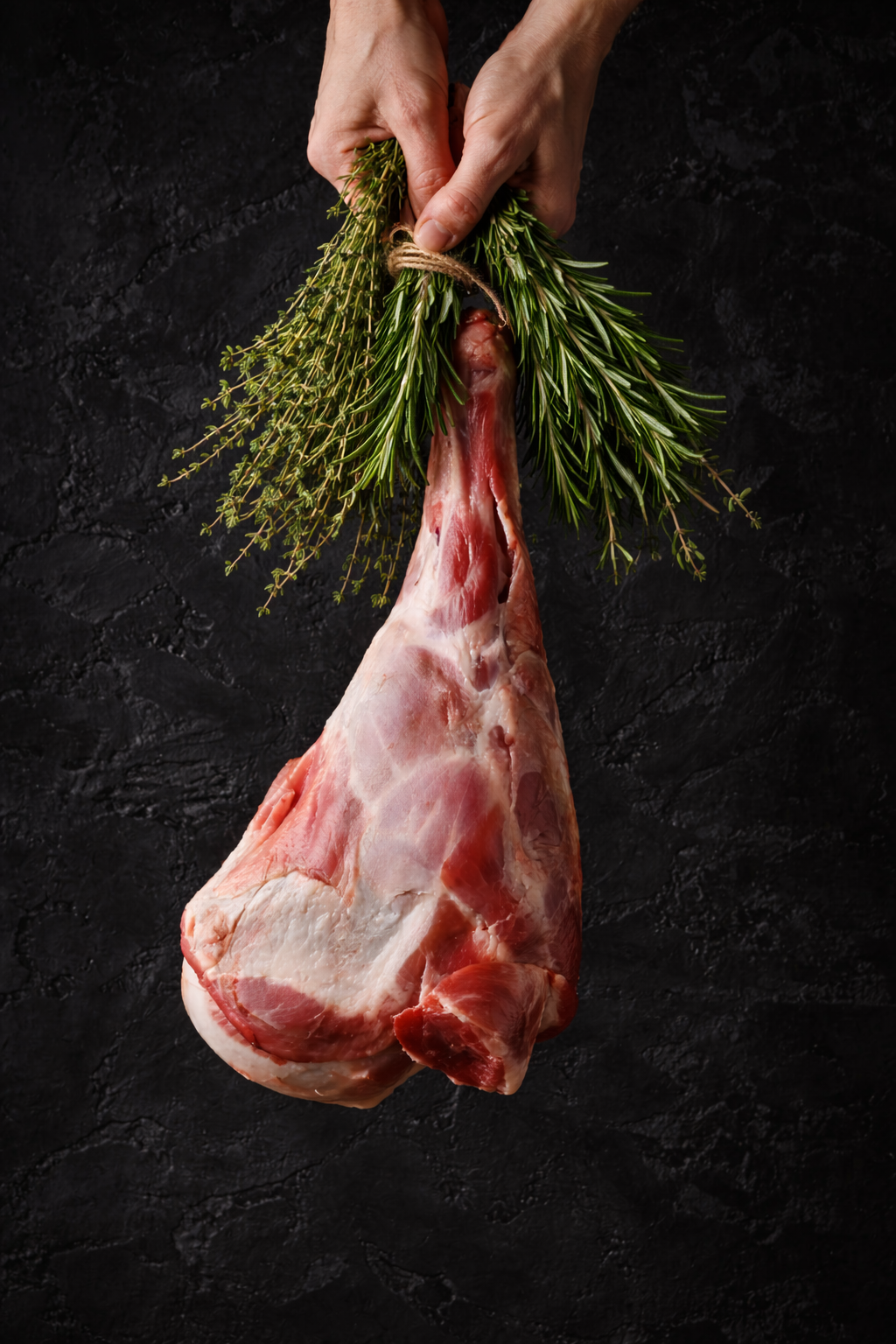
OUR FLOCK
The flock rotates through pasture based on growth and recovery, adjusted for weather and season. Diet is diverse forage. No grain.
We do not use synthetic fertilizer or herbicide. Harvest lambs receive no antibiotics. Breeding ewes are not on a routine antibiotic program.
LANDSCAPE TRANSLATED THROUGH MEAT
Flavor is built months before harvest. Diverse forage, steady movement, and long recovery produce lamb with a clean fat profile and a restrained finish. This is place based lamb. It is not a commodity substitute.
NATURAL FINISHING
Lambs are finished on pasture in season. We do not push weight with grain. We finish to target size and fat cover based on kitchen needs and seasonal conditions.
HARVEST
We harvest once per year, typically at 9 to 11 months, in late fall and early winter. This timing matters. Lambs have lived a full grazing season and are finished on cool weather forage.
Processing is specified for minimal stress and clean trim. We deliver direct so chain of custody stays intact. Chefs can request target carcass size, cut standards, and dry aging protocols by arrangement.
Expected profile
Dependent upon finish profile chosen.
Ridgemeade,
Where Pasture & Climate
Become Flavor
TERROIR
South Lake Erie ridge, lake effect climate. Place and season are the input. The lamb tastes like it does because of what grows here and how it is managed.
FLAVOR + NUTRITION
We do not chase claims. We run standards that show up on the plate. When soil and recovery are protected, the rest follows.
THE JAMISONS
Our baseline came from our mentors John and Sukey Jamison. Stewardship first. Flavor as the outcome. The details change pasture to pasture. The discipline does not.